


When Kindness Becomes Something Exceptional

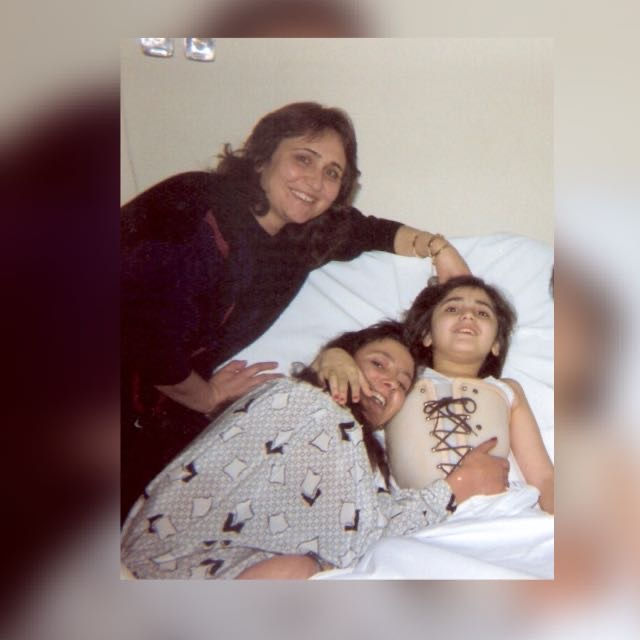
The other day I sent a voice message to Amalia wishing her a happy birthday. When I spoke with her later, she told me how much that message had meant to her – she had not received any other messages for her birthday. I was stunned. Amalia is my ‘Spanish mother’, the beautiful woman who cared for me during the long years I spent in Spain for medical treatment during my childhood. Without her, I would not be the person I am today. She has the kindest and most generous heart you can imagine – not just towards me, she is kind to everyone who crosses her path. How could it be that she had not received showers of well-wishes, gifts and loving attention for her birthday this year?
It suddenly struck me just how harsh and brutal the world has become. What happened to us that kindness has become something we need to be reminded of? And yet, if there is anything that our elders and previous generations felt was essential to transmit, it is precisely the importance of kindness and compassion. Without it, we can no longer call ourselves ‘human’, and without it our societies collapse. This lesson has been transmitted to us in stories and proverbs from generation to generation. It has been told to children from infancy so that they in turn could pass on this precious lesson to those that followed.
Can it be that somehow, somewhere along the way, we have lost this insight?
Kindness has become like a rare flower, to the point that we are surprised when we encounter it. We are no longer shocked if someone bumps into us, does not respond to a message or does not answer a simple question. Instead, it has become almost disconcerting when an employee in a shop or administrative office chooses to be patient despite being under pressure. If a stranger stops to help another stranger, we even wonder if there is maybe some ulterior motive behind that act of kindness. To protect ourselves from the harshness of the world outside, we put on a heavy coat of indifference. If we sense that another person may be in trouble, we have learned to look the other way and pretend we did not notice. By doing so, we too contribute to making the streets that we pass through a bit colder and more sinister.
In the story of the Good Samaritan, what stays with me is not simply that a man helped a stranger who was injured. It is that he stopped. He could have passed by on the other side of the road, just as the priest and the Levite. Then, as now, when we walk past a person in distress, it may of course be due to fear of a person that we identify as belonging to another group. We are also always in a hurry - afraid of being late, of falling behind, or just missing out on something we had set our minds on. But it may also be because we simply did not realize that another human being needed us.
A person may outwardly appear independent, successful, cheerful, perfectly capable of working, talking and laughing, while fighting a battle that nobody else knows about. And when we do not understand what we cannot see, we sometimes judge it. Why is this person so sensitive? Why do they not socialise? Why can they not just get over it? Why do they not leave the house? But we do not always know what happened before someone reached that point. Some people did not choose isolation. Isolation chose them after they had been hurt enough times. The ‘independence’ that is displayed like a trophy, for all to see, can be just another way of protecting ourselves from the pain of rejection, just like the cloak of indifference may protect us from witnessing the pain of others. Then protection becomes isolation. And eventually, isolation can become a way of life.
I think about children too. A child being laughed at in school because they look different. A girl being left out because she does not fit in. A child with an invisible disability who cannot explain why certain things are difficult for them. A child living with anxiety, fear or trauma at home, who arrives at school and is simply labelled as “difficult”. A child who stammers. A child who does not know how to defend themselves. A child who does not have the things the other children have. A child who is simply different.
Years later, we meet an adult and say: “They are just very withdrawn.” But we do not ask: “Who taught them that getting close to people was not safe?” That is why I think compassion is not only about helping someone when they fall, or approaching the injured stranger, rather than passing by on the other side of the road. Perhaps it is also about making sure that we are not the reason they fall in the first place. It is noticing the joke that may not be funny to everyone. The comment about someone’s appearance. The way we mock the way another person speaks.The person who always sits alone. The child who does not have the courage to say they are hurting. The person who keeps declining invitations. The person we call “too sensitive”. The person who asks for something small, and receives our irritation simply because we are in a hurry.
We cannot always know what our behaviour means to someone else. Quite often, we will not even be aware of the pain that we inflict, while for that person, it may have been one of those moments that taught them that silence is safer than speaking, and that loneliness hurts less than trying to get close to people. This is the cruelty of small things. But we need to remember that small things are also powerful and transformative. Sometimes a friendly face is all it takes. Taking a moment to stop and answer a question. A person who says: “Come and sit with us.”
In a world that is becoming more complicated, we can certainly not fix everything. But we can at least choose what we add to it. Another hurtful word? Another judgement? Another cruel joke? Or a brief moment of compassion as we go about our daily lives? We may never know whether a kind word could have changed the course of someone’s life. But we can still give that word. We can stop. We can wait. We can ask. We can invite someone to sit with us. We can believe a person when they tell us they are hurting. We can choose not to mock a difference we do not understand. We can remember that just as certain disabilities are invisible, every person we meet carries a life story and burdens that we cannot see or understand.
I do not think we can be kind all the time. We are human. We get tired. We get angry. We make mistakes. We say things we later regret. Speaking for myself, I know that countless times I was too tired or self-absorbed to realize when I should have stopped, or listened, reached out or invited a fellow human being into the warmth of a circle of friends. I do believe, though, that there is a difference between making mistakes and making cruelty a way of living. Between being angry and using anger to humiliate someone. Between setting a boundary and taking away another person’s dignity.
As a child, Amalia’s kindness made all the difference to me. Remembering her patience and gentle daily courage has been an inspiration. That is why, throughout my life I have tried my best to keep that lesson with me. We are living in times when ordinary kindness is needed more than ever, to make it through the various hardships and crises that we are facing without losing our humanity. We may feel powerless to change the world, but one word at a time, together, we can at least make the world a bit friendlier, the streets a bit less sinister. We can relearn to see other people’s difference not as a threat, but as part of the beauty of life.
Chavia Ali
chaviaali


Comments